
Standards for Predictable Moss Wall Design Results
Preserved Moss Walls: What Architects Need to Know About Visual Outcome
Mar 14, 2026

Preserved moss walls are popular in biophilic design, but visual quality varies dramatically across suppliers. Understanding key control points prevents disappointing installations.
Common Visual Quality Issues

Color Inconsistency
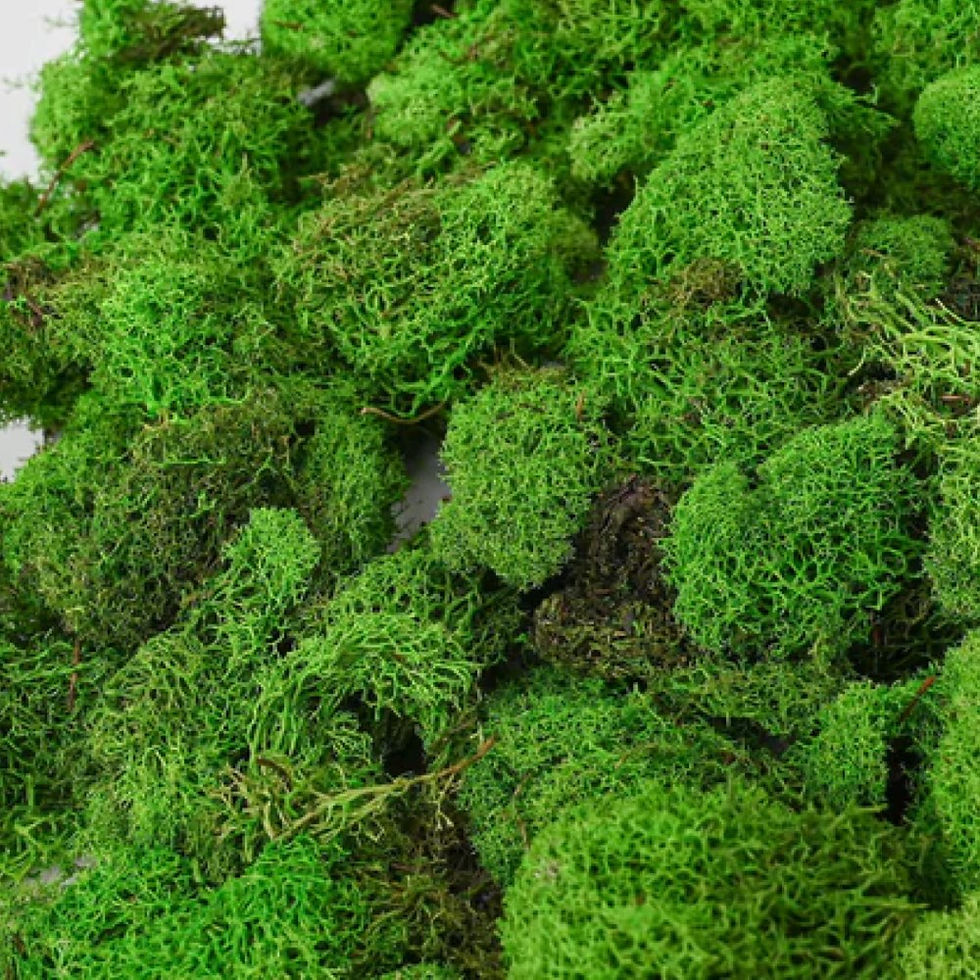
Raw preserved moss exhibits color variations that disrupt visual flow.
Surface Irregularities
Thickness variations and coverage gaps expose backing materials.

Visible Construction
Poor fabrication creates obvious seams and loose edges.

Transportation and Storage Damage
Fragile materials arrive compressed or deteriorated without proper handling during shipping and storage.
Material Specifications
Proper material specifications establish the foundation for achieving consistent visual quality across your entire installation project.
1. Color Standards
Color range refers to hue shift, not lightness/darkness variation.


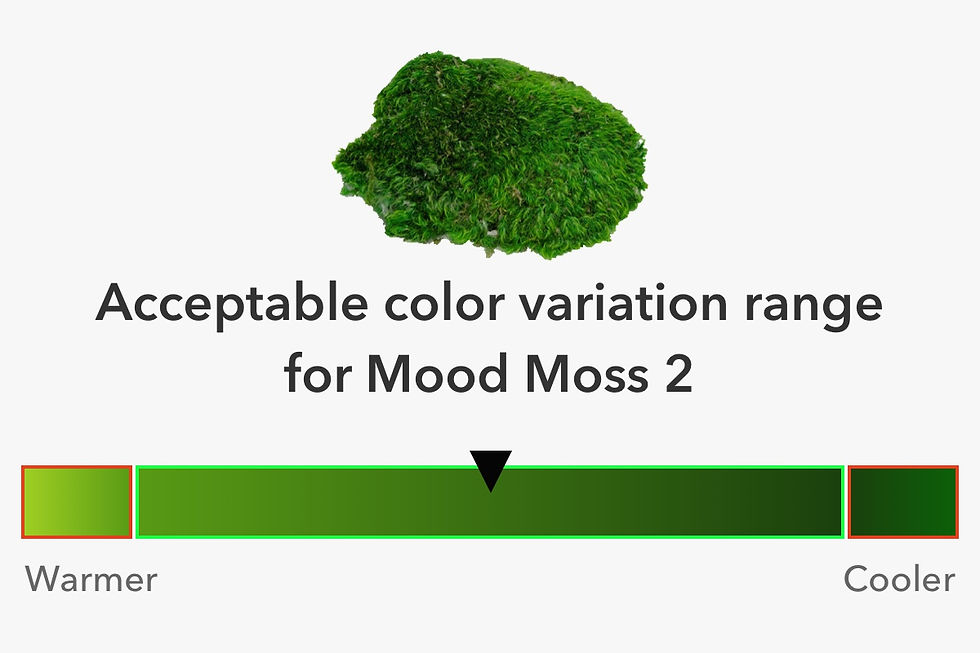
The above color variation ranges are for reference only. Please refer to the Visual Finish Acceptance Standard for detailed specifications.
2. Thickness Standards
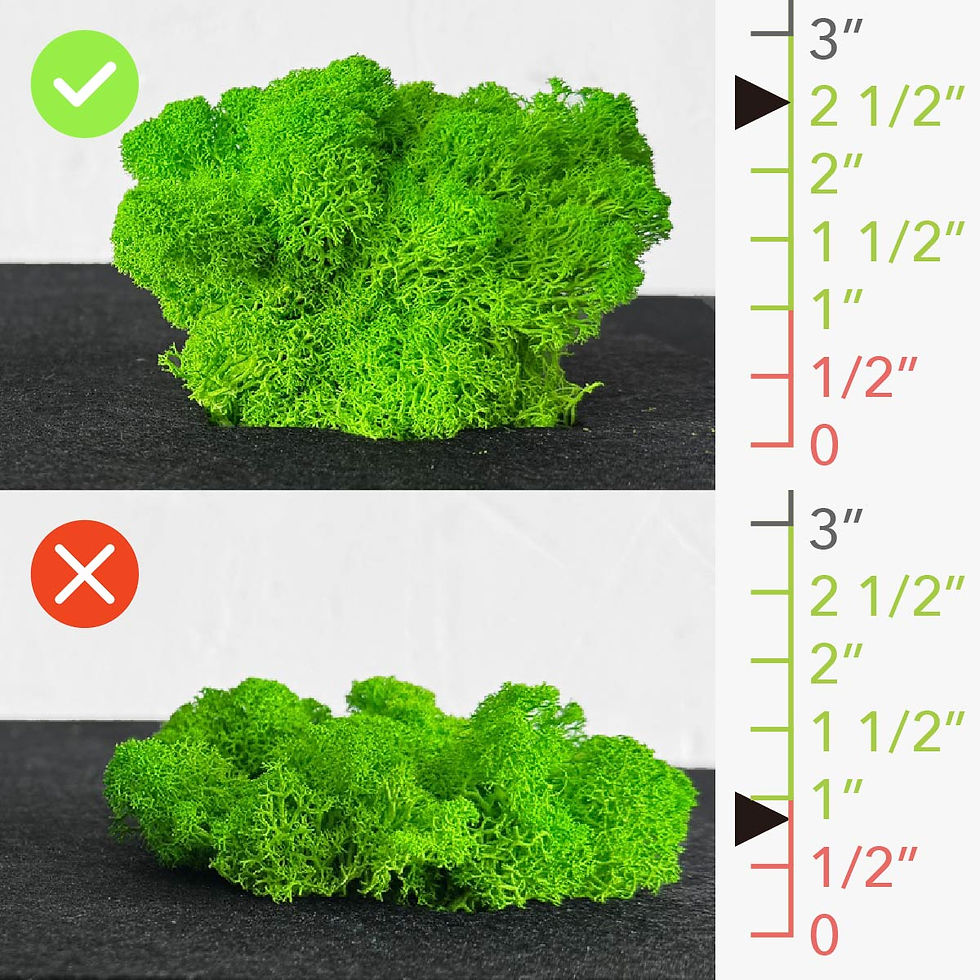
Reindeer Moss Thickness Standard

Bun Moss Thickness Standard

Mood Moss Thickness Standard
3. Form Standards
Various forms within the acceptable range are all considered passing. No grading system - simply acceptable or reject.

Reindeer Moss
Full&fluffy VS All Roots

Bun Moss
Round&full VS Yellowed

Mood Moss
Plump&hairy VS Yellowed

Sheet Moss
Even coverage VS Yellowed
Fabrication Standards
Quality fabrication techniques ensure seamless integration and professional appearance that meets architectural design expectations.

Panel Assembly Standards
- Panel gaps ≤1mm for seamless appearance - Consistent mounting substrate alignment - Secure moss attachment without visible fasteners

Edge Treatment
- Complete backing concealment at all perimeters - Clean, finished edges without loose material - Professional trim details where applicable

Design Fidelity
- Consistent thickness creating intended dimensional impact - Color patterns that bring original vision to life - Visual consistency from concept to completion

Preserved moss wall panel packaged with protective foam to prevent damage during transportation and storage.
Shipping Protection
Protective packaging prevents damage during transport and ensures your moss walls arrive in pristine condition.
-
Custom-fitted packaging
-
Moisture-resistant materials
-
Pre-shipment quality photos
Design Innovation and Problem Solving
What to Look for During Installation
When evaluating your moss wall installation, proper lighting reveals the true quality of the work. Natural or bright artificial light (around 300 lux) helps you assess the overall visual impact from a normal viewing distance of about 6 feet, while closer inspection at 3 feet reveals craftsmanship details. Quality installations show consistent coloring appropriate for each moss type and a professional finish where no structural elements distract from the natural beauty.
Protecting Your Design Vision
Prioritize suppliers who demonstrate consistent sourcing and preservation processes, standardized fabrication methods, protective packaging with pre-delivery verification, and performance guarantees for long-term visual integrity. Clear upfront standards ensure installed results match design concepts.